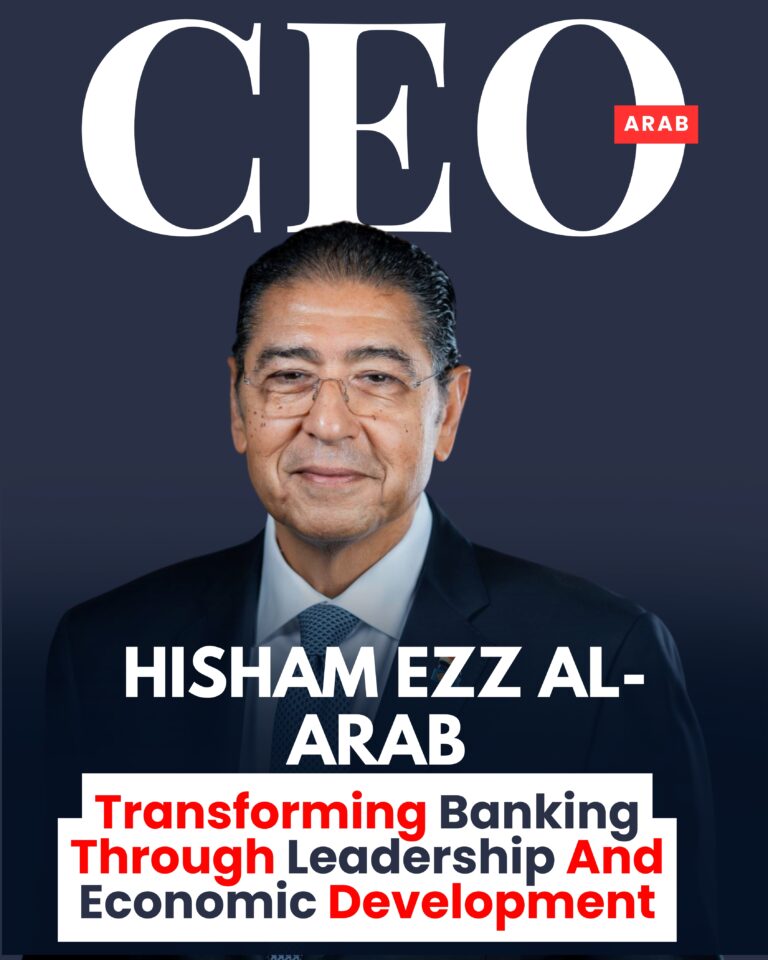
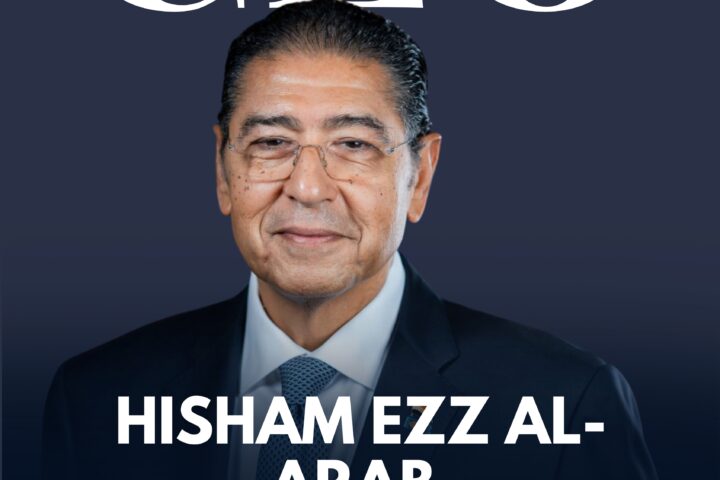
Ezz Al-Arab was reappointed CEO and Board Member of Commercial International Bank (CIB) Egypt in November 2024, marking a continued chapter in a leadership journey that has already spanned nearly two decades. His return to the role reflects both institutional trust and the continuity of a strategy built on financial strength, disciplined growth, and long-term value creation.
In a banking landscape defined by evolving markets, infrastructure demands, and regional investment flows, his leadership continues to position CIB as one of Egypt’s most influential financial institutions.
Driving Strategic Financing for National Development
One of the most significant developments under his leadership came in October 2025, when Commercial International Bank (CIB) Egypt extended $632 million in long-term financing to the Suez Canal Economic Zone (SCZONE).
This financing package is designed to support large-scale infrastructure development, including:
- Utilities expansion
- Energy systems development
- Water infrastructure
- Transport and logistics networks
Such projects are central to strengthening Egypt’s position as a regional hub for trade, industry, and investment. The transaction reflects CIB’s role not just as a commercial lender, but as a strategic financial partner in national economic development.
Strong Financial Performance in a Dynamic Market
As of June 2025, Commercial International Bank (CIB) Egypt reported strong financial fundamentals, including:
- Total assets of $27.8 billion
- Net profit of $702.3 million in H1 2025
These results highlight the bank’s resilience and ability to maintain performance amid global economic shifts, inflationary pressures, and evolving regional financial conditions.
Under Ezz Al-Arab’s leadership, CIB continues to demonstrate a balance between profitability, risk management, and strategic investment in growth sectors.
A Legacy of Long-Term Leadership at CIB
Ezz Al-Arab’s association with CIB spans nearly twenty years, during which he previously served as Chairman and Managing Director.
His long-term leadership has been characterized by:
- Strengthening corporate governance structures
- Expanding institutional banking capabilities
- Enhancing risk management frameworks
- Supporting sustainable credit expansion
- Positioning CIB as a leading private sector bank in Egypt
This continuity has contributed to the bank’s reputation for stability and strategic foresight in a competitive regional banking environment.
Banking as a Driver of Social Impact
Beyond commercial banking, Ezz Al-Arab also plays a significant role in social development through his leadership of the CIB Foundation.
The foundation focuses primarily on improving children’s healthcare across Egypt, addressing critical needs in medical access, treatment, and community support programs.
This social dimension reflects a broader understanding of banking leadership—where financial institutions contribute not only to economic growth but also to societal wellbeing.
Balancing Profitability with Purpose
A defining feature of Ezz Al-Arab’s leadership approach is the balance between financial performance and social responsibility.
On one hand, CIB continues to deliver strong profitability and asset growth. On the other, its leadership actively invests in initiatives that support healthcare, education, and community development.
This dual focus reinforces the idea that modern banking leadership extends beyond balance sheets into long-term national development.
Strengthening Egypt’s Economic Infrastructure
The financing provided to SCZONE reflects a broader strategic role for Commercial International Bank (CIB) Egypt in supporting Egypt’s infrastructure expansion.
By channeling capital into critical sectors such as energy, transport, and utilities, the bank contributes directly to:
- Industrial growth
- Trade facilitation
- Investment attraction
- Job creation
- Economic diversification
This positions CIB as a key financial enabler of Egypt’s long-term development agenda.
A Leadership Model Built on Stability and Vision
Ezz Al-Arab’s leadership style is defined by continuity, institutional strength, and strategic clarity.
Rather than pursuing short-term shifts, his approach focuses on:
- Sustainable banking practices
- Long-term credit growth strategies
- Institutional resilience
- Governance excellence
- Strategic alignment with national priorities
This model has helped CIB maintain its position as a leading financial institution in Egypt’s banking sector.
Shaping the Future of Egyptian Banking
As Egypt continues to evolve economically, the role of major financial institutions becomes increasingly important in supporting infrastructure, industry, and innovation.
Under Ezz Al-Arab’s leadership, Commercial International Bank (CIB) Egypt is positioned not only as a lender but as a strategic partner in national development.
Through a combination of financial strength, governance discipline, and social responsibility, his leadership reflects a broader vision for banking—one that integrates growth, stability, and impact.
In doing so, Ezz Al-Arab continues to shape both the direction of CIB and its contribution to Egypt’s economic future.